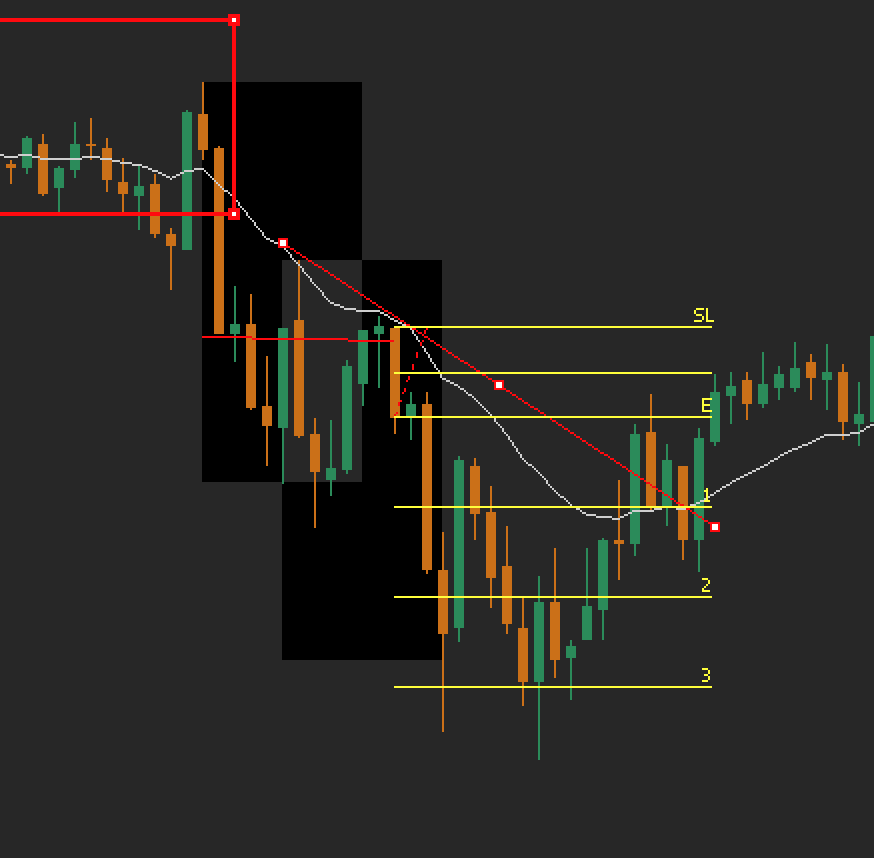
AC1 Strategy
Note: I learned trading primarily in another language, so some of the terms used here may not match standard English trading terminology. If a term seems unfamiliar or made-up, it likely has a standard English equivalent. You can find definitions of each terms in the definitions page
Overview:
AC1 is a strategy designed to catch new market cycles. A market cycle typically consists of three stages: a spike, a channel, and a trading range. AC1 focuses on the stage between the spike and the channel.
Step 1: Identify a strong spike
A strong spike is usually made up of at least three consecutive strong candles.
The spike should gradually decrease in size toward its end, followed by a single pullback.
The most reliable spikes often originate from a trading range.
Step 2: Analyze the pullback
The pullback should form either a microchannel or a flag pattern.
Each pattern has a different entry strategy, but the microchannel is generally the strongest signal.
Step 3: Identify the signal bar
A signal bar is a candlestick indicating that the pullback has ended and the trend is likely to resume in the direction of the spike.
Common types of signal bars:
Engulfing candle
Pin bar
Step 4: Enter the trade
Enter the position as soon as the signal bar confirms.
Place your stop loss behind the signal bar.
Stay in the trade until:
You reach a risk-to-reward ratio of 1:2 (your target), or
The current market leg ends.
Note on “leg”: In this context, a leg refers to a single movement within the market’s three-part movement cycle. Measure the last leg to estimate when the current movement may finish.
Testing & Reliability:
The AC1 strategy has been tested on approximately 378 setups across different market conditions.
So far, it has shown a win rate of around 80–85%.It’s important to note that over one-third of this testing was done through backtesting, meaning the results may not fully reflect real-time trading conditions where analysis time is limited and market pressure is higher.
Because of this, AC1 should always be used alongside proper market analysis and strict risk management rather than relying on the strategy rules alone.